
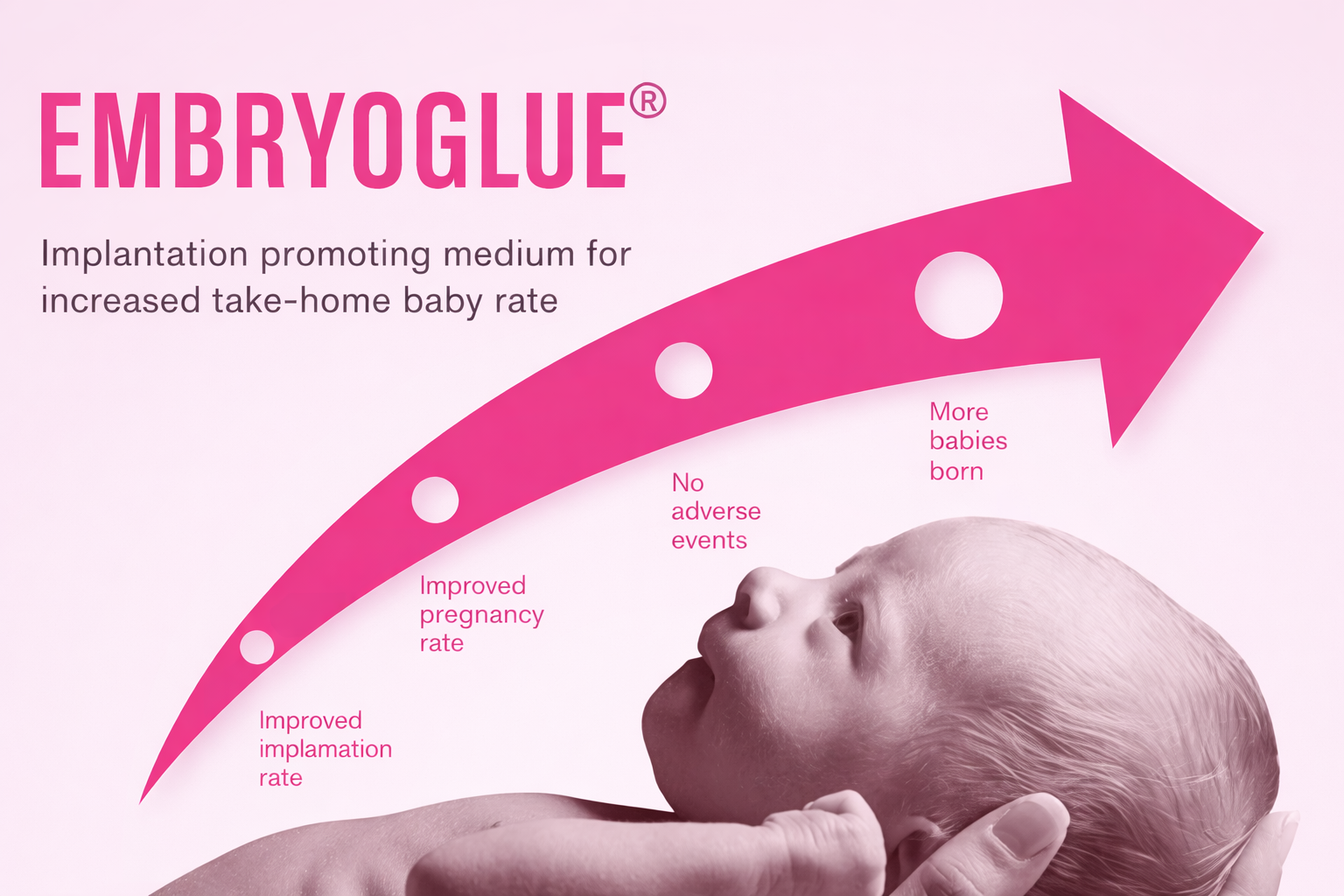
Advancements in assisted reproductive technology have significantly improved the success rates of In Vitro Fertilization (IVF). One such innovation is embryo glue, a special solution used during the embryo transfer stage to support implantation. In this article, we explain what embryo glue is, how it works, its composition, and the benefits it may offer during IVF treatment.
Book an appointment: Dr Arockia Virgin Fernando, Fertility Specialist.
Understanding Embryo Glue

Embryo glue, also known as embryo transfer medium, is a specially designed solution used during IVF embryo transfer. It helps the embryo attach more effectively to the uterine lining by creating a supportive and adhesive environment, similar to natural uterine conditions.
Composition of Embryo Glue
The formulation of embryo glue may vary by manufacturer, but it generally contains components that closely resemble the natural environment of the uterus:
Benefits of Using Embryo Glue
Using embryo glue during IVF offers several potential advantages:
How Embryo Glue Is Used During IVF
Embryo glue is applied as part of the embryo transfer procedure:
Conclusion
Embryo glue is a valuable addition to modern IVF treatment, designed to support embryo implantation by mimicking the natural uterine environment. With benefits such as improved embryo attachment, reduced displacement, and potentially higher success rates, embryo glue represents a promising advancement in fertility care. As reproductive technologies continue to evolve, embryo glue may play an important role in improving IVF outcomes for many couples.

.png)

.png)