
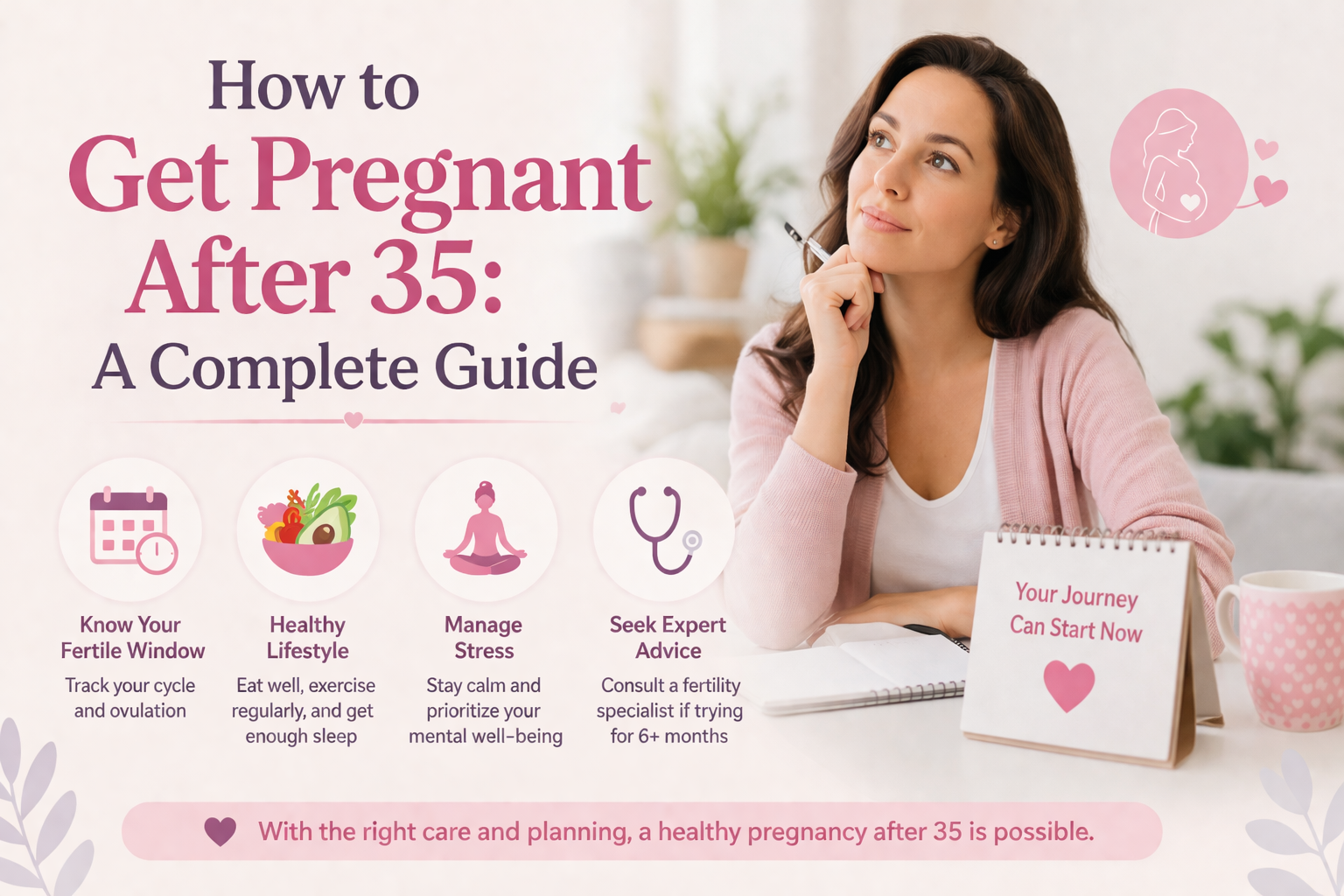
Getting Pregnant After 35
Many women today are choosing to start or grow their families after the age of 35. While this can be an exciting and joyful journey, it may also come with certain challenges.
Although conceiving after 35 can be more difficult—especially for a first pregnancy—it is far from impossible. Thousands of women in their late 30s conceive naturally every year. However, age-related changes can affect fertility. Two key factors include less frequent ovulation and a reduced ovarian reserve. As women age, ovulation may not occur in every cycle, and both the number and quality of eggs gradually decline.
In addition, women over 35 may face a slightly higher risk of miscarriage, often due to chromosomal abnormalities. Despite these challenges, many women go on to have healthy pregnancies and babies.
Book an appointment: Dr Arockia Virgin Fernando, Fertility Specialist.
How to Improve Your Chances of Getting Pregnant After 35
Understanding your fertile window is essential. This is typically a six-day period during your menstrual cycle that ends around 24 hours after ovulation. Tracking your cycle can help you identify the best time to conceive.
Maintaining a healthy lifestyle also plays a crucial role. This includes:
When to Seek Medical Help
If you have been trying to conceive for more than six months without success, it’s advisable to consult a fertility specialist. Early evaluation can help identify any underlying issues and allow timely access to fertility treatments or preservation options if needed.
With proper planning and early prenatal care,best fertility specialist in bangalore many women over 35 experience safe pregnancies and healthy births—similar to those in their 20s. Age may influence fertility, but it doesn’t have to be a barrier to becoming a parent.

.png)

.png)