
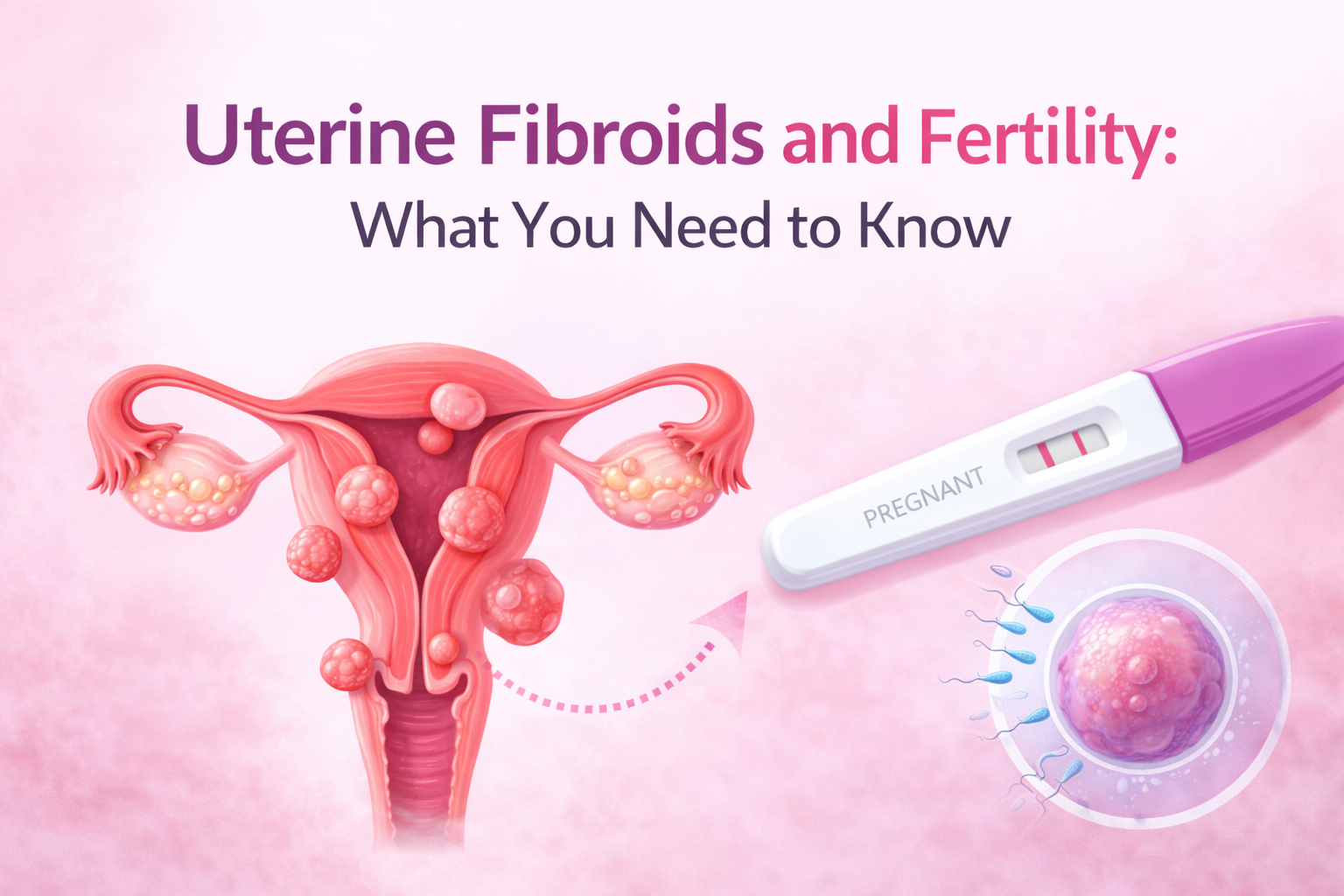
Fibroids and Fertility: What You Need to Know
Have you recently undergone a pelvic scan and discovered that you have uterine fibroids? Or did your doctor mention that fibroids might be the reason for your painful or heavy periods?
Uterine fibroids are non-cancerous growths that develop in the uterus and may affect a woman’s menstrual cycle or fertility. They are quite common, especially among women of reproductive age. Although fibroids are widespread, the exact cause is still not completely understood.
Different types of fibroids can affect the body in different ways. Some may cause symptoms, while others may remain unnoticed for years. Let’s explore what fibroids are and how they can impact fertility.
Book an appointment: Dr Arockia Virgin Fernando, Fertility Specialist.
What Are Fibroids?

Fibroids are non-cancerous tumours made of smooth muscle tissue that develop in the uterus. They are also known as myomas or leiomyomas. Fibroids form when a single muscle cell in the uterine wall multiplies repeatedly, eventually growing into a mass or tumour.
Fibroids can vary greatly in size, number, and location. Some women may have a single fibroid, while others may develop multiple fibroids at the same time.
These growths may appear in different parts of the uterus. While some fibroids cause symptoms such as heavy bleeding, pelvic pain, or prolonged menstrual cycles, others may produce no symptoms at all. In many cases, women only discover fibroids during routine pelvic scans or fertility tests.
Types of Fibroids
Fibroids are classified according to where they grow in the uterus.
Subserosal Fibroids
These fibroids grow on the outer surface of the uterus and may expand outward into the pelvic cavity.
Intramural Fibroids
These develop within the muscular wall of the uterus and are the most common type of fibroid.
Submucosal Fibroids
These fibroids grow just beneath the uterine lining and may extend into the uterine cavity.
Pedunculated Fibroids
Some fibroids grow on a thin stalk that attaches to the uterus. These may protrude either inside the uterine cavity or outward. In some cases, the stalk can twist and cause pain.
Occasionally, fibroids growing on the outer wall of the uterus may attach to nearby organs or ligaments. In rare situations, fibroids can also develop outside the pelvic region.
Impact of Fibroids on Fertility
When a woman experiences difficulty conceiving, doctors usually evaluate several factors, including egg reserve, ovulation patterns, and the presence of fibroids.
Not all fibroids affect fertility. In fact, many women with fibroids conceive naturally and have healthy pregnancies. However, about 10% of women experiencing infertility also have fibroids.
The size and location of the fibroid play a major role in determining its impact on fertility. Fibroids larger than 6 cm or those located inside the uterine cavity may reduce the chances of conception.
Fibroids may affect fertility in several ways:
Fibroid Removal and Fertility
Many women wonder whether removing fibroids can improve fertility.
The answer depends on the individual case. Fibroids do not always cause infertility, as many other factors can influence a woman’s ability to conceive.
However, if a fibroid is very large or located in an area that interferes with conception, doctors may recommend surgical removal. If fibroids are the main cause of infertility, removing them while preserving the uterus can improve fertility outcomes.
Fertility Treatments With Fibroids
In some situations, fibroids may not be responsible for infertility. In such cases, fertility specialists evaluate other potential causes.
If fibroids are small or located in less problematic areas, they may not require removal. Fertility experts can work with gynaecologists to determine the most suitable treatment plan. Many women successfully undergo fertility treatments even with fibroids present.
Complications of Fibroids During Pregnancy
Many women only discover fibroids during routine pregnancy scans. If fibroids remain small and do not affect the baby’s growth, they typically do not cause serious complications.
In some cases, fibroids may grow during pregnancy due to hormonal changes. When fibroids grow inside the uterine cavity, they may reduce the available space for the developing baby. This can occasionally lead to
restricted fetal growth or preterm birth.
In rare situations where the risk becomes significant, doctors may consider surgery during pregnancy to remove the fibroid.
Conclusion
Fibroids can cause discomfort, heavy bleeding, or fertility challenges depending on their size and location. However, many women with fibroids can conceive and have healthy pregnancies.
If fibroids are causing symptoms or affecting fertility, consulting an experienced gynaecologist can help determine the best treatment options. With proper medical care, many fertility issues related to fibroids can be successfully best fertility specialist in Bangalore managed.
FAQs
1. Can you get pregnant if you have fibroids?
Yes. Many women with fibroids conceive naturally and have healthy pregnancies. However, certain fibroids may affect fertility depending on their size and location.
2. What size of fibroid can prevent pregnancy?
Fibroids larger than 6 cm may affect pregnancy chances. However, location is equally important, as even smaller fibroids in sensitive areas can interfere with conception.
3. How do you know if fibroids are causing infertility?
If you have fibroids and difficulty conceiving, your gynaecologist may perform imaging tests and fertility evaluations to determine whether the fibroids are responsible.
4. Can fibroids affect your menstrual cycle?
Yes. Fibroids may cause heavy bleeding, irregular periods, or severe menstrual pain in some women.

.png)

.png)