
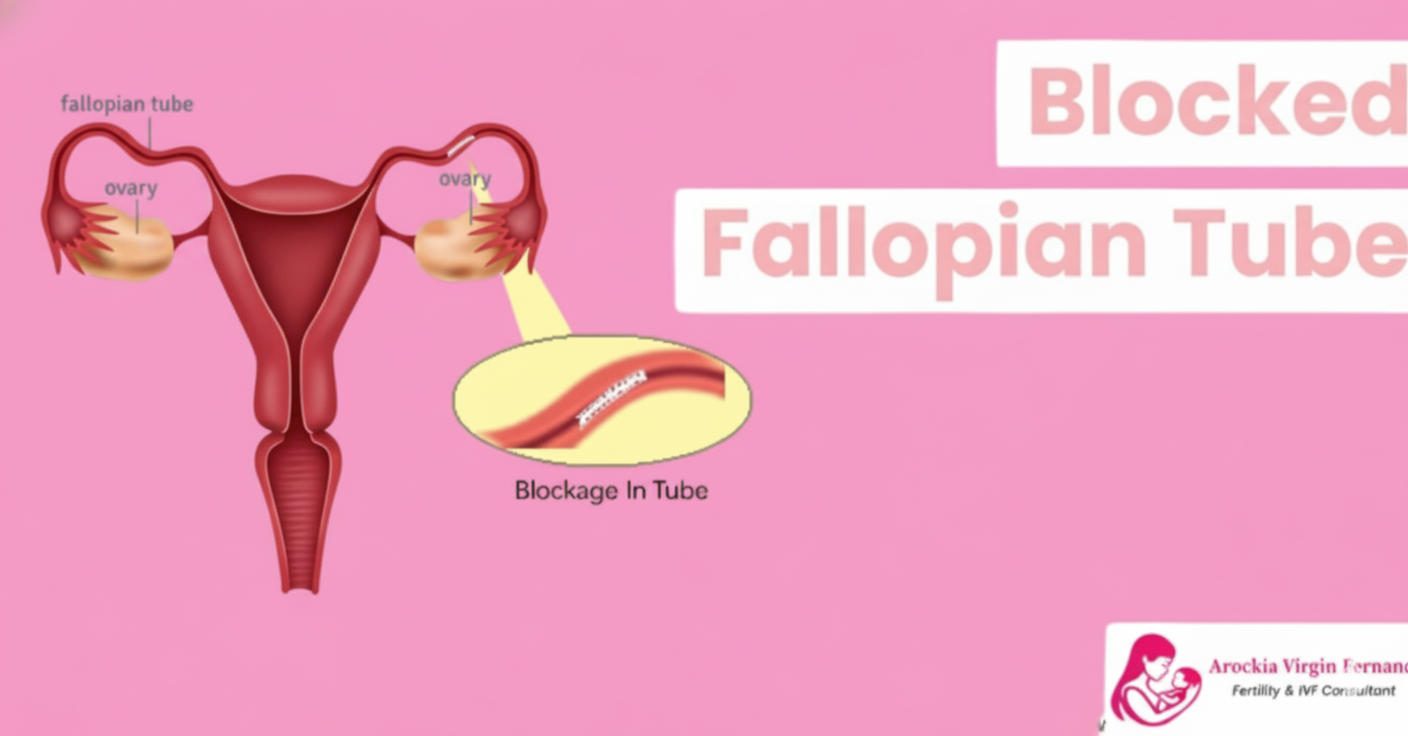
Blocked Fallopian Tubes: Symptoms, Causes, and Treatment
The fallopian tubes are an essential part of the female reproductive system, playing a crucial role in conception. After ovulation, the ovum (egg) is released from the ovaries and is captured by the fallopian tube. This is the place where the sperm meets the egg, leading to fertilisation.
Each tube is muscular and lined with ciliated epithelial cells—tiny hair-like structures called cilia that help move the fertilised embryo toward the uterus within three days and assist sperm in travelling upward from the uterus.
👉 Book an online appointment with Dr Arockia Virgin Fernado for expert consultation on fertility concerns.
What Causes Fallopian Tube Blockage?
A blocked fallopian tube, medically known as tubal occlusion, occurs when scar tissue or damage obstructs the passage. It is one of the common causes of female infertility.
There are no direct symptoms of blocked fallopian tubes, but certain signs and risk factors can indicate the possibility.
Symptoms of Blocked Fallopian Tubes
Common Causes of Tubal Blockage
Several conditions may lead to blocked fallopian tubes, including:
These factors can lead to scar tissue formation or blockage that interferes with conception.
Diagnosis of Fallopian Tube Blockage
Two common procedures are used for diagnosis:
1. Hysterosalpingography (HSG)
An X-ray test in which a contrast dye is injected through the vagina into the uterus. If the fallopian tubes are open, the dye flows freely and spills into the pelvic cavity. Blocked tubes prevent the dye from passing through.
The World Health Organisation (WHO) recommends HSG as the primary screening test for tubal infertility.
2. Laparoscopy
A minimally invasive surgical procedure that allows direct visualisation and assessment of the tubes and surrounding structures.
Treatment Options for Blocked Fallopian Tubes
IVF remains the best option for tubal ligation factor infertility.

.png)

.png)